
The iodine RDA (Recommended Dietary Allowance) for adults and teens is 150 mcg a day, set by the Food and Nutrition Board of the US National Academies. Why do so many in the iodine community, including health professionals, take 12.5 mg or more, which is over 80 times the iodine RDA?

Iodine has always been an important part of our diet. However, in North America its importance was only appreciated in the early 1900s.[1] Landlocked areas in the US and southern Canada, from the Rockies to New York, experienced an epidemic of goiter. Goiter is the swelling of the thyroid which allows it to absorb as much iodine from the blood as possible. Areas close to the sea have iodine-rich water, air, soil and food. The Goiter Belt, most of which is well inland, has very little iodine in the environment.
The Canadian and US governments started adding iodine to salt and other foods to solve the epidemic. At the time it was believed that 2 mg of iodine was toxic for the human body and the recommendation was set well below that level. In the 1950’s the RDA was set at only 150 mcg which was sufficient to address the goiter problem. At that time iodine could be found in bread, as it was added to the yeast as a preservative.[2, 3] It was also added to salt to ensure the population was getting enough iodine for preventing goiter. Later, iodine in bread was replaced by bromine, a halide which competes with iodine for receptor sites in the body.
Adding iodine to regular foods solved the goiter problem, but it did not solve iodine deficiency. Iodine deficiency had not yet been well measured and understood.

More and more doctors and people around the world now recognize the importance and benefits of taking sufficient iodine for the entire body. They recognize that the recommended daily amount is not nearly enough to restore optimal health in the body. Most users take 12.5 mg and it is becoming more common for users to take 25 mg, 50 mg, 100 mg and more without experiencing harmful side effects.
According to Dr. Guy Abraham’s iodine-loading research, a body that has reached whole-body iodine sufficiency can hold about 1500 mg of iodine, of which about 50 mg is stored in the thyroid. Cells that concentrate iodine include the thyroid, muscle tissue, white blood cells[4], salivary glands, eye glands and muscles, kidney cells, the pancreas, lungs[5], liver, nasal passage, cerebrospinal fluid, blood vessels in the brain, skin, adrenals, testicles[6, 7], thymus gland, ovaries[8], placenta and uterus[9].
Some users take larger doses at the beginning of supplementation to restore the body to optimal function. These larger doses allow the body to better displace toxic halides from iodine receptor sites and restore iodine levels in tissues, including breast tissue. This can reduce the risk of cancer in the breast, prostate and in other parts of the body.
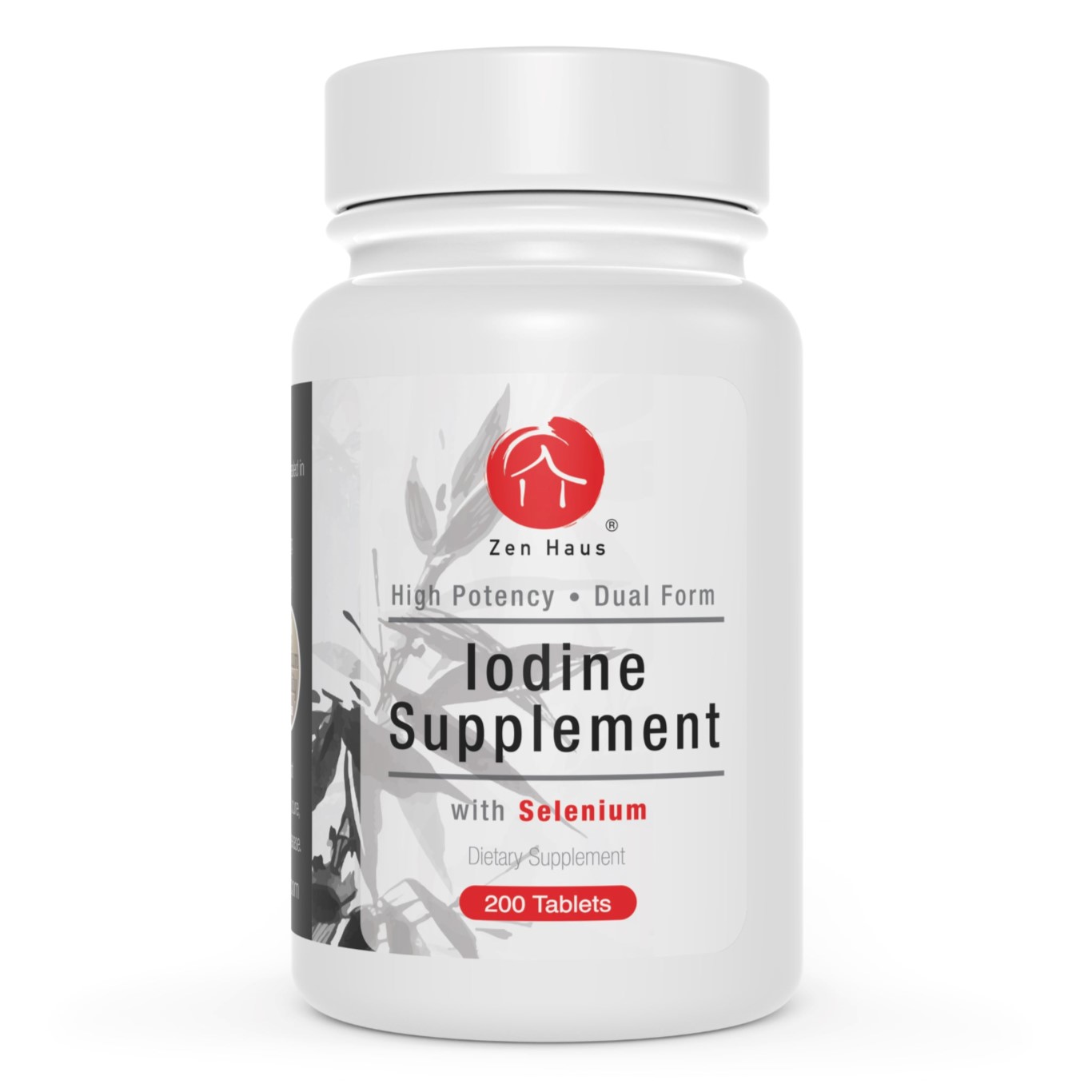
Iodine is an essential component of total body health. So how much iodine do you need daily? The RDA of 150 mcg is enough to prevent goiter, but for whole-body sufficiency most users take 12.5 mg a day. The Zen Haus Dual Form Iodine Supplement is labelled ‘High Potency’ because it provides 12.5 mg of elemental iodine per tablet. Much higher than the Iodine RDA. It is what prominent iodine doctors and researchers recommend as a maintenance amount for total body supplementation.
FAQ
What is the RDA for iodine?
150 mcg a day for adults and teens 14 and older, 220 mcg during pregnancy and 290 mcg while breastfeeding.
Why is the iodine RDA so low?
It was set to prevent goiter, not to restore iodine to every tissue in the body. Adding iodine to salt solved the goiter problem but not iodine deficiency.
How much iodine per day do people take?
Most users take 12.5 mg a day, and it is becoming more common to take 25 mg, 50 mg or more.
Why does Zen Haus use 12.5 mg?
It is what prominent iodine doctors and researchers recommend as a maintenance amount for total body supplementation. Each Zen Haus tablet has 12.5 mg of elemental iodine (about 25% molecular iodine and 75% iodide) with 40 mcg selenium.